


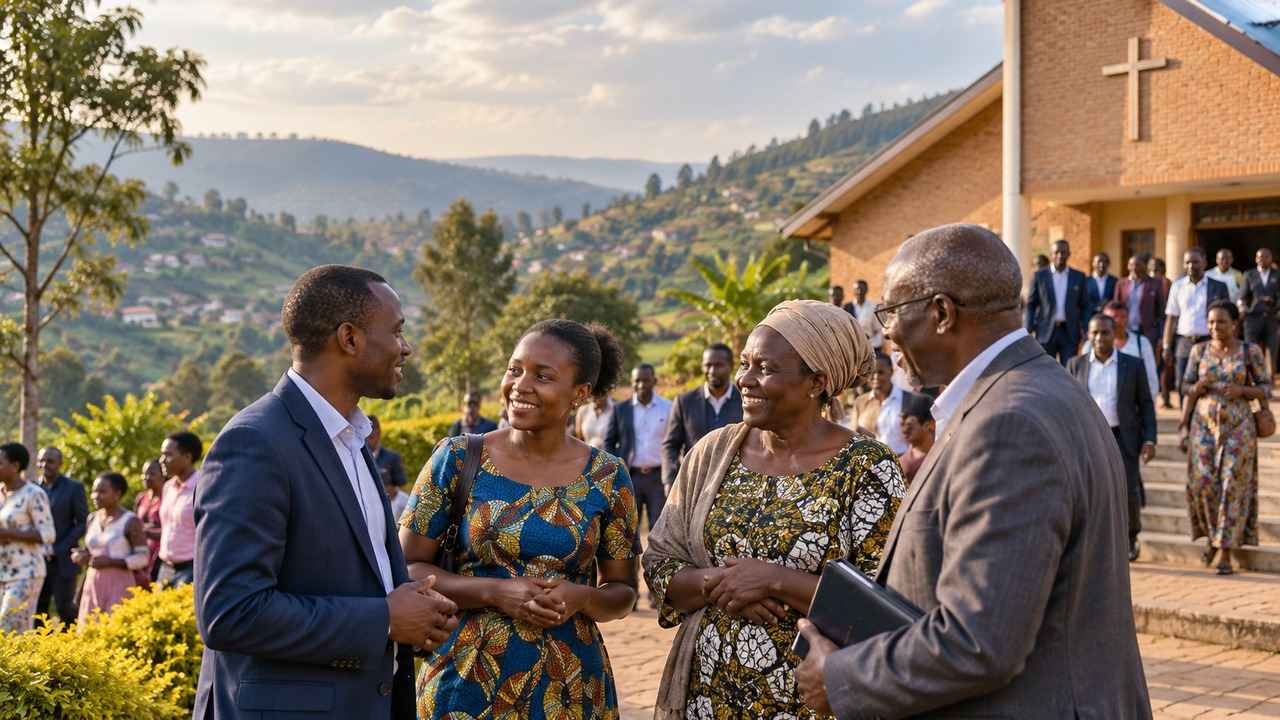
Rwanda is a small, densely populated country in Africa’s Great Lakes region. More than three decades after the 1994 genocide against the Tutsi, the country still carries deep memories of violence, loss, justice, reconciliation, and rebuilding. Christianity is deeply rooted in Rwandan society, yet widespread Christian identification also raises an important spiritual question: will public Christianity be matched by repentance, genuine faith in Christ, faithful teaching, integrity, and love of neighbour?
Prayer Burden at a Glance
Pray for genuine repentance and saving faith in Christ, pastors and churches marked by biblical faithfulness and accountable leadership, wise and fair regulation of churches, healing and reconciliation after the genocide, just and restrained public leadership, peace between Rwanda and the Democratic Republic of the Congo, compassionate care for refugees and vulnerable families, and credible Christian witness in daily life.
Last verified: 12 September 2026
Why Rwanda Needs Prayer Now
Rwanda needs prayer for churches where Christian identity is matched by living faith, for reconciliation rooted in truth, and for wisdom amid regulation, economic pressure, refugee needs, and regional conflict.
Rwanda has rebuilt much since the devastation of 1994. Public institutions have been strengthened, services have expanded, the economy has grown, and the government has placed strong emphasis on national unity and public order. Churches and faith-based organisations have contributed through schools, health care, community programmes, reconciliation work, and care for people in need.
But Rwanda’s history gives particular weight to the difference between calling oneself Christian and faithfully following Christ. Christianity was already widespread before the genocide. During the violence, some Christians courageously protected neighbours, while others—including people connected with churches—failed gravely or took part in evil.
That history should not be used to dismiss the church. It should lead Christians to pray for churches that form people whose loyalty to Christ is deeper than ethnic identity, political allegiance, social respectability, or inherited religion.
Rwanda therefore needs more than visible Christian activity. It needs churches where the gospel produces repentance, courageous truthfulness, holiness, reconciliation, and sacrificial love.
The country also needs prayer as churches respond to strict regulation, families face economic pressures, refugees seek security and opportunity, and conflict continues across Rwanda’s western border in the Democratic Republic of the Congo.
Country Snapshot
A brief orientation to Rwanda’s region, population, leadership, religious setting, economic pressures, and role as a place of refuge.
Rwanda is one of Africa’s most densely populated countries. Much of the population remains connected to rural life and agriculture, while Kigali and other towns have grown rapidly.
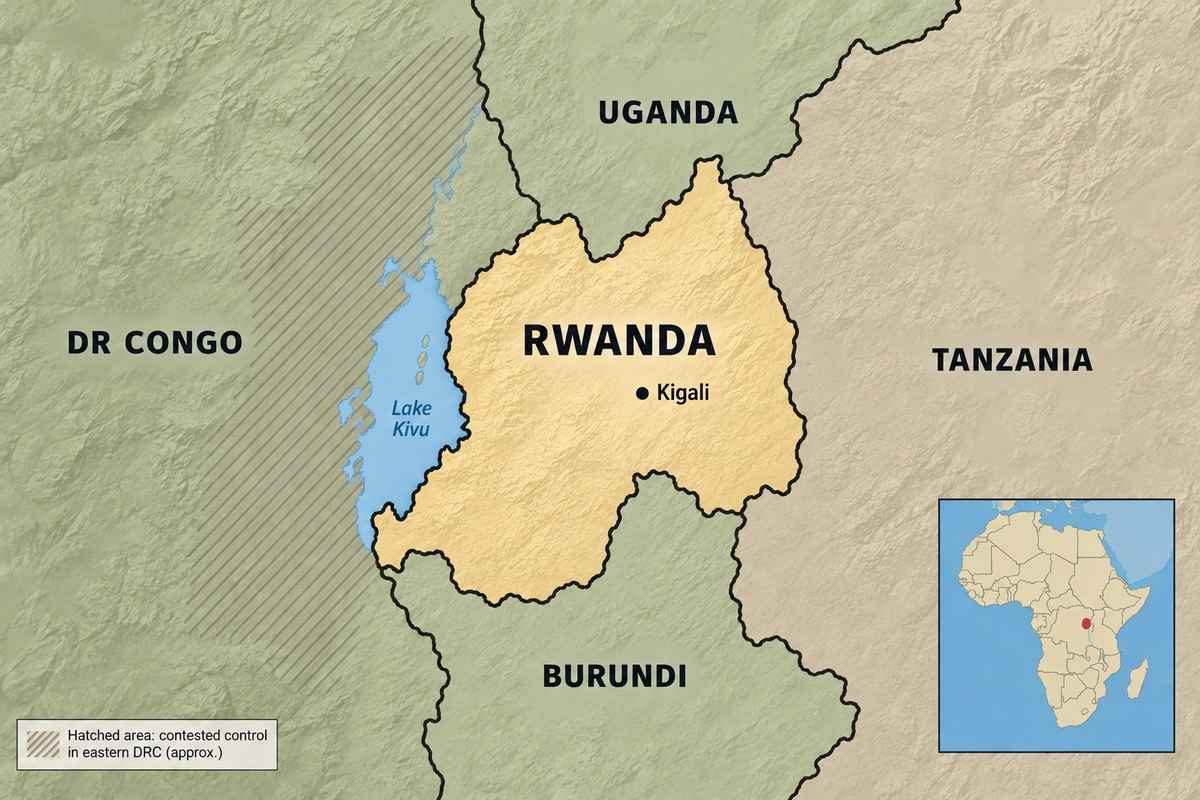
The economy has expanded strongly, but many households still face hardship. Food insecurity, child malnutrition, limited employment opportunities, pressure on small farms, and unequal access to opportunity continue to affect families.
Rwanda also hosts refugees and asylum-seekers, especially from the Democratic Republic of the Congo and Burundi. Their presence reflects both Rwanda’s role as a place of refuge and the continuing instability of the surrounding region.
Spiritual and Practical Challenges Affecting Christians and Churches
Rwanda’s churches need prayer for genuine discipleship, accountable leadership, wise engagement with regulation, practical mercy, and faithful public witness.
From Christian identity to living faith
Christian affiliation is widespread, but church membership, baptism, family tradition, or public religious identity cannot take the place of repentance and faith in Christ. Pray for churches that clearly proclaim the gospel and patiently teach Scripture. Pray for believers whose faith shapes their family life, work, use of authority, treatment of neighbours, attitudes toward ethnicity, and response to wrongdoing.
Faithful and accountable church leadership
Concerns about unsafe buildings, weak governance, financial abuse, poorly qualified leaders, and exploitation have formed part of the government’s case for stronger oversight of religious organisations. Churches themselves therefore have reason to pursue integrity. Pray for congregations to be protected from false teaching, greed, manipulation, personality cults, sexual abuse, and misuse of spiritual authority. Pray for pastors and elders who teach Scripture faithfully, handle money honestly, welcome proper accountability, and lead as servants rather than rulers over their people.
Regulation of churches and places of worship
Rwandan authorities have inspected thousands of places of worship and closed many that did not meet legal, safety, sanitation, building, leadership, or other requirements. The government says these measures are intended to protect worshippers and promote responsible religious practice. Some church leaders and religious-freedom advocates have raised concerns about the cost, reach, and burden of the regulations. Pray for legitimate safety and accountability standards to be applied fairly and proportionately, and for church leaders to deal wisely with public authorities while remaining faithful to Scripture and conscience.
Economic pressures on families
Rwanda’s development has brought real gains, but many people still live with difficult economic pressures. Poorer households can be especially vulnerable to food insecurity, limited work, low agricultural productivity, and rising pressure on family resources. Pray for worthwhile employment, productive farms, honest businesses, wise economic decisions, and better opportunities for young people. Pray for churches that respond to practical need with compassion and wisdom while continuing to offer the deeper hope of the gospel.
Justice, public responsibility, and civic life
Rwanda’s government places strong emphasis on stability and national unity. International human-rights organisations have raised concerns about political opposition, freedom of expression, and civic space. Rwandan authorities dispute important parts of these criticisms and maintain that national legal processes should be respected. Christians do not need to settle every political dispute before they can pray faithfully. Pray for rulers, judges, civil servants, journalists, community leaders, and citizens to value truth, justice, restraint, and the dignity of every person.
Christian Life and Witness in Rwanda
Rwanda’s churches have significant opportunities to teach Scripture, serve communities, pursue reconciliation, welcome displaced people, and show the character of Christ in ordinary life.
Churches remain deeply involved in Rwandan life. Christian communities serve through worship, education, health care, ministry among children and young people, support for vulnerable families, and work for reconciliation and peace.
This gives the church both opportunity and responsibility.
Pray that Christian influence will not be measured only by numbers, institutions, buildings, or public prominence. Pray instead for faithfulness to Christ. Ask God to strengthen biblical teaching in local churches, theological education, children’s ministry, youth ministry, and Christian homes.
Rwanda’s history also gives special weight to the Christian calling to reject ethnic hatred, dehumanising speech, revenge, and indifference to injustice. Pray that believers will show the reconciling power of the gospel in ordinary relationships—not by pretending the past does not matter, but through truth, repentance, forgiveness, justice, patience, and love.
Give thanks for Christians who educate children, care for the sick, serve vulnerable people, welcome refugees, strengthen families, and work for peace. Pray that service for the common good will remain joined to biblical conviction and a clear witness to Christ.
Recent Developments
Regional peace efforts, church regulation, refugee needs, and the neighbouring DRC Ebola outbreak are the main current developments shaping prayer for Rwanda.
-
Current through September 2026
Rwanda–DRC peace efforts remain unfinished
Rwanda and the Democratic Republic of the Congo remain involved in regional and international efforts to reduce conflict and improve security. Agreements and negotiations have opened possible paths toward peace, but armed conflict, displacement, and insecurity continue in eastern DRC.
The two countries also continue to disagree sharply about major security threats. Rwanda points to the FDLR and accuses Congolese authorities of supporting armed groups hostile to Rwanda. Outside governments and international observers have accused Rwanda of supporting AFC/M23 forces in eastern DRC. Rwanda disputes or challenges important parts of those allegations.
Prayer significance: Pray for civilians to be protected, armed groups to lose the ability to terrorise communities, governments to tell the truth, and leaders to honour genuine commitments to peace.
-
2024–2026
Church regulation continues to affect congregations
Churches continue to feel the effects of large-scale inspections and closures of places of worship that did not meet government requirements. Religious organisations must navigate rules concerning legal registration, safety, governance, leadership, and accountability.
Prayer significance: Pray especially for smaller congregations seeking to meet legitimate requirements while continuing to gather, teach Scripture, disciple believers, and serve their communities.
-
30 June 2026
Refugees remain part of Rwanda’s humanitarian landscape
As of June 30, 2026, UNHCR data recorded roughly 139,000 forcibly displaced people and others of concern in Rwanda, most of them from the Democratic Republic of the Congo and Burundi.
Prayer significance: Pray for displaced families to find safety, adequate food, education, worthwhile work, protection, and hope, and for Rwandan churches and communities serving them.
-
September 2026
Ebola in neighbouring Democratic Republic of the Congo
A serious outbreak of Bundibugyo Ebola virus disease has been spreading in the Democratic Republic of the Congo, including in North Kivu. Because Rwanda shares a border with the DRC, preparedness and surveillance are important. As of September 12, 2026, the sources reviewed did not report an Ebola outbreak inside Rwanda.
Prayer significance: Pray for health workers and affected communities in the DRC, for careful preparedness in Rwanda, and for infections to be detected and contained without panic, misinformation, or stigma against sick people and their families.
How to Pray for Rwanda
Pray for genuine faith, healthy churches, truthful reconciliation, wise public leadership, peace, mercy, and credible Christian witness.
-
Pray for genuine faith and mature discipleship. Pray that people will move beyond inherited or outward Christianity to repentance and living faith in Jesus Christ. Ask God to form believers who know Scripture, love Christ, resist sin, forgive others, care for the weak, and live consistently with the gospel they profess.
-
Pray for faithful pastors and healthy churches. Pray for pastors, elders, ministry leaders, and theological teachers who handle God’s Word faithfully and lead with humility. Ask God to protect churches from false teaching, financial exploitation, sexual abuse, manipulation, and misuse of spiritual authority, and to build congregations where sound doctrine is joined to patient discipleship, sincere fellowship, mercy, evangelism, and courageous obedience.
-
Pray for wisdom and fairness in religious regulation. Pray for public officials responsible for regulating churches to protect genuine public interests without unnecessarily restricting peaceful Christian ministry. Pray for churches to respond honestly to legitimate standards concerning safety, finances, governance, and accountability, while preserving room for worship, biblical preaching, evangelism, discipleship, and Christian service.
-
Pray for healing and reconciliation rooted in truth. Pray for survivors and families who continue to carry grief from the 1994 genocide against the Tutsi. Ask God to comfort those who still live with trauma and loss. Pray for repentance where guilt remains hidden, justice where wrongdoing must still be addressed, forgiveness where wounds remain deep, and reconciliation that does not require people to deny the truth. Pray that younger generations will reject ethnic hatred and honour every neighbour as a person made in the image of God.
-
Pray for Rwanda’s leaders and institutions. Pray for President Paul Kagame, Prime Minister Justin Nsengiyumva, national and local officials, judges, security personnel, and civil servants. Ask God to give them wisdom, justice, humility, restraint, courage to correct wrongdoing, and concern for the people they serve. Pray for institutions that protect human dignity, restrain corruption and abuse, uphold justice, and make room for peaceful participation in national life.
-
Pray for peace in the Great Lakes region. Pray for civilians in eastern DRC and elsewhere in the region who live under the threat of armed violence. Ask God to restrain armed groups and disrupt networks that profit from violence and exploitation. Pray that Rwanda, the DRC, and other regional actors will pursue legitimate security without fuelling further conflict, that hidden wrongdoing will come into the light, and that leaders will keep genuine commitments to peace.
-
Pray for refugees and families under economic pressure. Pray for refugees and asylum-seekers living in Rwanda and for Rwandan households facing poverty, food insecurity, unemployment, or limited opportunities. Ask God to provide safe homes, education, health care, worthwhile work, strong families, and compassionate communities. Pray for churches to serve vulnerable people with wisdom, dignity, and practical mercy.
-
Pray for protection from Ebola. Pray for health workers and communities responding to Ebola in neighbouring DRC. Pray for strong surveillance and preparedness in Rwanda, rapid identification of suspected cases, and protection for health workers and communities. Pray also against fear, stigma, and misinformation.
-
Pray for credible Christian witness. Pray for Christians serving as parents, teachers, health workers, farmers, businesspeople, students, pastors, public officials, and neighbours. Ask God to make Rwanda’s churches places where truth is spoken, sin is taken seriously, grace is treasured, vulnerable people are protected, enemies are loved, and the character of Christ is visible in everyday life.
Give Thanks
Rwanda’s needs are serious, but there are also specific mercies and faithful acts for which Christians can give thanks.
-
Give thanks for churches and Christian organisations serving communities. Thank God for worship, education, health care, peacebuilding, and care for vulnerable people.
-
Give thanks for Christians who have acted with courage and mercy. Thank God for believers who have protected neighbours, pursued reconciliation, cared for people in distress, and resisted hatred.
-
Give thanks for Rwanda’s rebuilding since 1994. Thank God for the reconstruction the country has experienced and for the stability many communities now know.
-
Give thanks for opportunities for worship, teaching, discipleship, and service. Thank God for places where Scripture can be taught, believers can be discipled, and local communities can be served.
-
Give thanks for people working for the wellbeing of families and communities. Thank God for those strengthening health care, education, agriculture, livelihoods, and family wellbeing.
-
Give thanks for hospitality toward displaced neighbours. Thank God for communities and churches that welcome refugees and displaced people.
-
Give thanks for every clear evidence of gospel fruit. Thank God for repentance, mercy, integrity, justice, reconciliation, and faithful Christian witness, and pray that these gifts will lead to deeper gratitude, humility, and obedience to Christ.
Last Verified / Update Note
This note helps readers understand when the guide was reviewed and which developments may affect how they use it for prayer.
Review Status
Reviewed for current prayer use
Rwanda’s current leadership and population context; religious composition and church life; regulation of faith-based organisations and places of worship; economic and household pressures; refugees and regional displacement; Rwanda–DRC security and peace efforts; civic-life concerns; and the neighbouring Democratic Republic of the Congo Ebola outbreak.
Genuine faith and mature Christian discipleship; faithful and accountable church leadership; wise and fair regulation of religious organisations; truthful reconciliation after the 1994 genocide against the Tutsi; justice and responsible government; vulnerable families and refugees; and peace across the Great Lakes region.
Implementation of Rwanda–DRC peace agreements and negotiations; security conditions in eastern DRC; changes affecting church regulation and reopening of places of worship; refugee movements; and the Bundibugyo Ebola outbreak in neighbouring DRC.
Several current issues are disputed or changing. Where Rwanda’s government and outside sources give different accounts—especially concerning eastern DRC and political or religious regulation—the guide distinguishes official positions from outside assessments rather than treating disputed claims as settled fact.
Help keep this guide accurate and current
If you noticed a possible correction, broken link, or significant country update, please contact the Nations Prayer Directory so we can review it carefully.
Key Sources Consulted
Sources that materially informed this Rwanda prayer guide, including Rwandan official sources, United Nations and humanitarian data, economic and public-health sources, and outside human-rights assessment.
Rwandan official, demographic, and church-regulation sources
- National Institute of Statistics of Rwanda (NISR). Population projections. Used for Rwanda’s medium 2026 population projection.
- National Institute of Statistics of Rwanda (NISR). Social and cultural characteristics report. Used for the 2022 census religious-composition baseline.
- Government of Rwanda. FAQ on inspection and closure of prayer houses. Used for the government’s official explanation of inspections, non-compliance, closures, safety, registration, sanitation, governance, and anti-exploitation concerns.
- Rwanda Governance Board (RGB). Laws and policies. Used for the current legal and regulatory framework affecting faith-based organisations.
- Rwanda Governance Board (RGB). Faith-based organisations. Used for registration, legal-personality, and regulatory context.
Great Lakes security, peace-process, and displacement sources
- Government of Rwanda. Statement at the United Nations Human Rights Council, 8 September 2026. Used for Rwanda’s official position on eastern DRC, the FDLR, Wazalendo, and regional security.
- United Nations Security Council. Record on the Democratic Republic of the Congo. Used for international assessment of the eastern DRC conflict, AFC/M23, Rwanda Defence Force allegations, the FDLR, civilian protection, and the Washington and Doha peace processes.
- UNHCR. Rwanda operational data. Used for the June 30, 2026 displacement total and countries of origin.
Economic, humanitarian, public-health, and civic-context sources
- World Food Programme (WFP). Rwanda country strategic-plan materials. Used for food-security, nutrition, rural-livelihood, and household-vulnerability context.
- World Bank. Rwanda macro-poverty outlook materials. Used for economic growth, poverty, and household-pressure context.
- World Health Organization (WHO). Disease Outbreak News, 10 September 2026. Used for the current Bundibugyo Ebola outbreak in the Democratic Republic of the Congo and regional cross-border risk.
- World Health Organization (WHO). Temporary recommendations for neighbouring states. Used for preparedness recommendations affecting Rwanda and other states sharing land borders with the DRC.
- Amnesty International. Rwanda opposition and civic-space assessment. Used as an outside human-rights perspective on political opposition and the detention of Victoire Ingabire and associated defendants; it is not treated as Rwanda’s official position.
Source Context
How to read the sources behind this guide in a setting where regional-security, church-regulation, displacement, civic, and public-health claims can be disputed or time-sensitive.
Source Context
- Eastern DRC. Rwanda’s government and international bodies differ significantly in how they describe responsibility for the conflict. Rwanda stresses the threat posed by the FDLR and alleged Congolese support for hostile armed groups. UN and other international sources have also reported Rwanda Defence Force support for AFC/M23 and have called for both an end to such support and the neutralization of the FDLR. The guide attributes these competing claims rather than presenting disputed military responsibility as settled fact.
- Church regulation. Official Rwandan sources describe recent regulation and closures primarily in terms of safety, legal compliance, accountability, and protection from exploitation. Some church leaders and religious-freedom advocates have raised concerns about the reach and burden of regulation. The guide presents both realities without assuming that every closure amounts to persecution or that every restriction is necessarily proportionate.
- Closure figures. The widely cited figure of more than 8,000 refers to prayer houses found non-compliant during the government’s inspection process. It should not be read as a verified September 2026 count of facilities that remain closed, because a current nationwide reopening total was not found.
- Political and civic claims. Outside human-rights organisations describe serious restrictions on political opposition and civic space, while Rwandan authorities dispute important aspects of such criticism and defend national judicial processes. The guide therefore prays for justice and responsible public life without relying on an unverified outcome in any individual current court case.
- Refugee figures. The approximately 139,000 figure is a dated UNHCR category of forcibly displaced people and others of concern as of June 30, 2026. It is not presented as a timeless or exact September population count.
- Ebola. WHO reports a severe and expanding Bundibugyo Ebola outbreak in neighbouring DRC and considers Rwanda part of the high-risk group of states sharing a land border with the DRC. At the time of this review, the sources consulted did not establish an Ebola outbreak inside Rwanda. The guide therefore emphasizes preparedness and prayer for neighbouring affected communities without describing Rwanda as an outbreak country.
A Closing Prayer for Rwanda
A prayer gathering Rwanda’s present burdens before the Lord.


