

Algeria is home to approximately 47.4 million people. Islam is the religion of the state, while Arabic and Tamazight are recognised as national and official languages. A small Christian minority lives in the country. Catholic dioceses continue to worship and serve publicly, while Christian and religious-freedom organisations report that all 47 congregations connected with the Evangelical Protestant Church of Algeria remained closed or had halted regular activity during their latest reporting periods. Many Algerian believers are reported to come from Muslim backgrounds and may face family opposition, social isolation, legal uncertainty, or difficulty finding a stable church where they can worship, learn Scripture, and receive pastoral care.
Prayer Burden at a Glance
Pray for Christians who cannot gather freely with a stable local congregation, for converts facing family or social pressure, for churches seeking legal recognition and suitable places of worship, and for faithful pastors, sound teaching, access to Scripture, courageous witness, just leadership, meaningful work for young people, mercy toward refugees and migrants, and wise stewardship of water and land.
Last verified: 7 August 2026
Why Algeria Needs Prayer Now
Many Algerian believers need more than private freedom of belief. They need stable church fellowship, faithful teaching, pastoral care, and a lawful way to worship together openly.
The central Christian prayer burden in Algeria is not simply that believers are few. Many also lack the support of stable, open, and legally recognised congregational life.
Christian and religious-freedom organisations report that all 47 congregations affiliated with the Evangelical Protestant Church of Algeria remained closed or had halted regular activity during their latest reporting periods. The status of individual congregations can change, but the wider effect is clear: many Protestant believers cannot worship publicly as they once did.
When a church closes, Christians lose more than a weekly meeting. They may lose regular preaching, pastoral oversight, corporate prayer, fellowship, the Lord’s Supper, and opportunities to disciple younger believers. New Christians may be left without mature guidance when they most need patient teaching and care.
Believers from Muslim backgrounds may face a different but deeply personal burden. Faith in Christ can be understood by relatives or neighbours as rejection of family, community, or national identity. Some Christians may hide their faith to protect relationships, employment, or personal safety. Others may experience conflict, exclusion, or accusations of dishonouring their families.
These pressures should not lead Christians elsewhere to speak with contempt about Algerian Muslims, families, or authorities. They should lead to compassionate and serious prayer—for salvation, peaceful homes, faithful churches, wise officials, and believers whose courage is joined with humility and love.
Algeria also faces wider pressures that shape daily life. Many young people struggle to move from education into secure employment. The economy remains heavily dependent on oil and gas. Refugees, asylum-seekers, and migrants face poverty, uncertainty, and limited legal protection. Water scarcity, food prices, and wildfire risks affect families and communities.
These national concerns help us understand the setting in which Algerian Christians live, work, raise their families, and serve their neighbours.
Country Snapshot
A brief orientation to Algeria’s people, leadership, languages, religious setting, and Christian presence.
Algeria regulates non-Muslim worship through laws and administrative procedures covering recognised religious organisations, worship services, and places of worship.
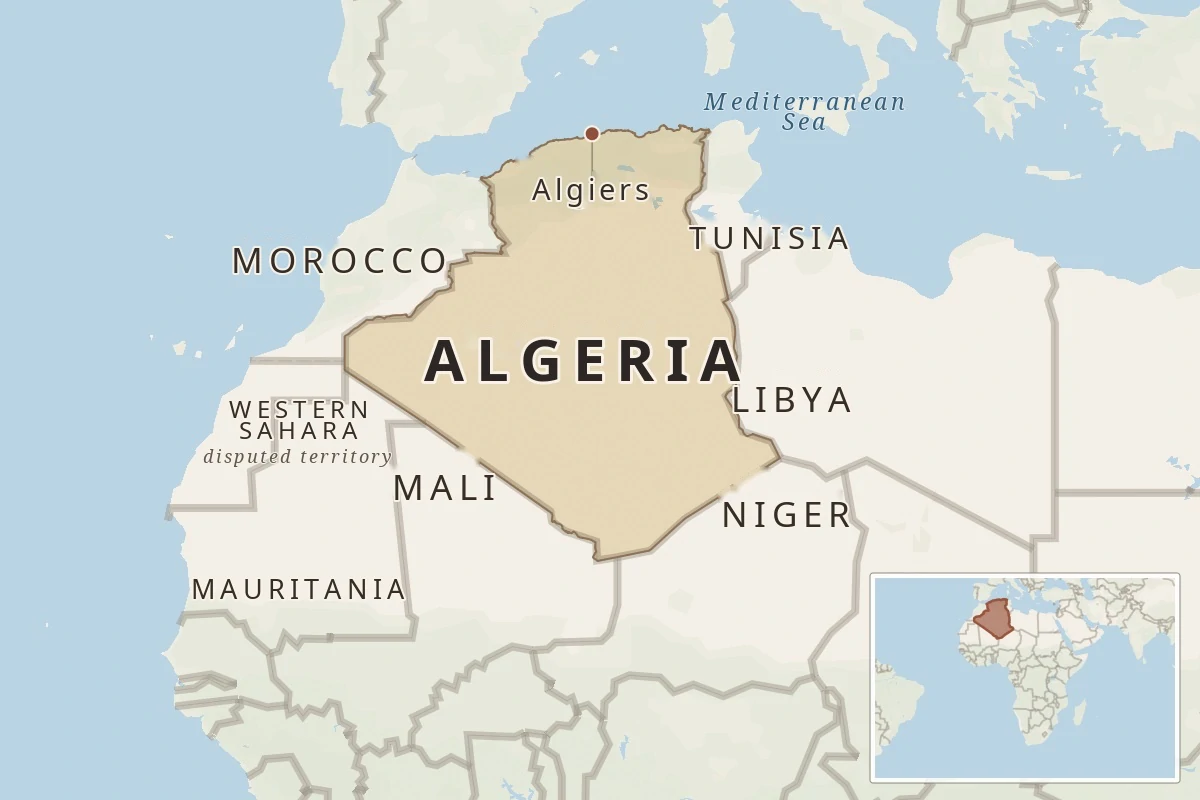
Some Christian institutions operate openly, particularly the country’s Catholic dioceses. Protestant communities, however, have faced prolonged difficulty obtaining legal recognition and approval for congregations and worship buildings.
Reliable figures for Algeria’s Christian population are difficult to establish. Public estimates may include expatriate Catholics, Algerian Protestants, private believers, and people who cannot safely identify their faith in public. It is therefore more responsible to speak of a small Christian minority than to treat any single estimate as certain.
Algeria is also a large and varied country. Its people include Arab and Amazigh communities with different regional, linguistic, and cultural histories. Prayer for Algeria should not reduce the nation to one religious, ethnic, or political description.
Spiritual and Practical Challenges Affecting Christians and Churches
Algerian believers need prayer for lawful worship, stable fellowship, faithful discipleship, access to Scripture, family peace, and wise public witness.
Restricted congregational worship
Algerian law provides a regulated system for non-Muslim worship, but Protestant communities have struggled to obtain the approvals needed for regular public activity. The government presents these rules as protections for lawful worship and public order. Christian and religious-freedom organisations say the system has often prevented Protestant churches from receiving meaningful legal recognition. Pray that church applications, legal cases, and requests for places of worship would be handled fairly, transparently, and without indefinite delay.
Isolation from church fellowship
When public congregations close, believers may depend on small private meetings, personal relationships, or online teaching. These can provide real help, but they cannot fully replace the ordinary life of a healthy local church. Isolated Christians may struggle to find pastors, recognise false teaching, receive correction, use their gifts, or persevere through suffering. New believers may be especially vulnerable.
Pressure on converts and families
For some Algerians, following Christ brings tension into the home. Conversion may be understood as rejection of inherited religion, family loyalty, or communal identity. Believers need wisdom to honour parents and relatives while remaining faithful to Christ. They need courage without harshness and patience when family members respond with suspicion or anger.
Access to Scripture and sound teaching
Christian communities have reported difficulty obtaining Bibles and educational material. Limited access to trustworthy resources can deepen the problems created by closed congregations and spiritual isolation. Pray for faithful translations of Scripture, sound Christian teaching, and discernment when believers rely on material found online.
Public Christian witness
Speaking openly about the Christian faith may bring legal or social risk, particularly when it is interpreted as unlawful proselytism or a threat to public order. Believers need wisdom about when, where, and how to speak. Christian witness should not depend on provocation, hostility, or careless confrontation. Yet fear must not silence the gospel.
Christian Life and Witness in Algeria
Christian communities face different conditions, but all need clear gospel proclamation, faithful Scripture teaching, holy living, courage, and love.
Christian life in Algeria cannot be described as though every church or believer faces the same conditions.
The Catholic Church maintains four dioceses and continues to hold public worship and other activities. Protestant congregations, especially those connected with the Evangelical Protestant Church of Algeria, have faced much greater closure and registration pressure.
This distinction matters. The continued public activity of one Christian tradition does not mean that every Christian community enjoys the same freedom. At the same time, the presence of churches or the use of the Christian name does not prove that every person within them possesses saving faith.
Pray for clear gospel proclamation, repentance, faith in Jesus Christ, faithful Scripture teaching, and holy living throughout every community that identifies as Christian.
Many Algerian believers live out their faith quietly. Their witness may be seen in ordinary faithfulness: caring for relatives, working honestly, helping neighbours, showing mercy, and refusing to answer hostility with hatred.
They may face two opposite temptations. One is to hide their faith completely because of fear. The other is to respond to pressure with bitterness, recklessness, or political anger.
Believers need both courage and love. Pray that they would honour lawful authority where conscience permits, refuse sin when obedience to Christ requires it, and respond to opposition without hatred or contempt.
Pray also for meaningful fellowship among Christians where truth and conscience allow. May believers encourage one another, share sound teaching, and serve together without treating doctrine as unimportant or compromising the gospel.
Recent Developments
These developments help readers pray about Algeria’s current leadership, religious framework, public life, economy, and daily provision.
-
September 2025
Sifi Ghrieb confirmed as prime minister
Sifi Ghrieb was confirmed as Algeria’s prime minister after serving in an acting capacity.
Prayer: Ask God to give him and the wider government wisdom, justice, integrity, concern for vulnerable people, and a commitment to public trust.
-
March 2026
Changes to the non-Muslim worship commission
Algeria amended the rules governing the national commission responsible for non-Muslim worship. The legal change is confirmed, but no public evidence reviewed by 7 August 2026 showed that it had led to Protestant church registrations or reopenings.
Prayer: Pray that the commission would work transparently and that long-standing church applications and disputes would receive fair consideration.
-
April 2026
Algeria’s first papal visit
The visit included meetings with national and religious leaders and gatherings with the Catholic community. It was received peacefully, but it did not mean that the difficulties facing Protestant congregations had been resolved.
Prayer: Give thanks for peaceful public engagement and pray that religious conversation would create room for truthful and gracious witness to Christ.
-
July 2026
Legislative elections
Algeria held legislative elections, with final official results recording domestic participation slightly above 21 percent. Government authorities emphasised the legal electoral process and review of appeals, while outside organisations raised concerns about restrictions on political and media activity and disputed the exclusion of some prospective candidates.
Prayer: Pray for honest government, lawful participation, fair institutions, and peaceful handling of political disagreement.
-
2026
Economic growth and employment pressure
Algeria experienced continued economic growth, supported partly by energy income, while facing fiscal pressure, dependence on oil and gas, and difficulty creating secure work for young people.
Prayer: Pray for wise economic reform, honest enterprise, and employment that allows young adults to support their families and serve their communities.
-
2026
Improved rainfall and harvest prospects
Improved rainfall replenished reservoirs and strengthened the outlook for cereal production.
Prayer: Give thanks for this provision and continue praying for wise water management, affordable food, resilient farming communities, and protection from drought and wildfire.
How to Pray
Pray for gospel fruit, faithful churches, just leadership, vulnerable people, and daily provision in Algeria.
Pray for salvation through Jesus Christ. Ask God to open hearts throughout Algeria to the truth of the gospel, granting repentance and faith in Jesus Christ alone for forgiveness and eternal life.
Pray for believers to endure faithfully. Remember Christians who feel isolated, watched, or afraid. Ask God to strengthen them through His Word and Spirit and keep them from denying Christ, becoming bitter, or losing hope.
Pray for converts and their families. Ask God to protect believers from Muslim backgrounds and give them wise and gracious words. Pray for parents, spouses, children, and extended family members to hear the gospel and see its fruit in changed lives.
Pray for churches to gather freely. Pray for fair decisions about church recognition, worship buildings, and congregational activity. Ask God to open a lawful path for closed or inactive churches to resume peaceful worship.
Pray for faithful pastors and teachers. Ask God to raise up mature, humble, and biblically grounded leaders who will teach the whole counsel of God, care for suffering believers, and guard churches from error.
Pray for access to Scripture. Pray for Bibles and trustworthy Christian resources to reach believers throughout the country. Ask God to give Christians a deep hunger for His Word and discernment in what they read and hear.
Pray for courageous and gentle witness. Ask God to give believers natural opportunities to speak about Christ and make their conduct marked by honesty, mercy, humility, and love.
Pray for Algeria’s leaders. Remember President Abdelmadjid Tebboune, Prime Minister Sifi Ghrieb, legislators, judges, and other officials. Ask God to restrain corruption and injustice and lead them to protect human dignity, peaceful worship, and the good of all communities.
Pray for young people and meaningful work. Ask God to provide employment, useful skills, honest enterprise, and wise economic leadership. Pray that discouragement would not drive young people towards despair, exploitation, or dangerous migration.
Pray for truthful and peaceful public life. Pray for justice, due process, honest journalism, and peaceful political disagreement. Ask God to protect Algeria from both disorder and the unjust use of authority.
Pray for refugees and migrants. Remember Sahrawi refugees living in camps near Tindouf, as well as urban refugees, asylum-seekers, and migrants elsewhere in Algeria. Pray for food, shelter, protection, fair legal processes, and opportunities for dignified work.
Pray for water, farms, and communities. Give thanks for improved rainfall. Pray for wise stewardship of reservoirs, forests, and agricultural land, and for protection from drought, destructive wildfire, and food insecurity.
Pray for God’s kingdom to come. Ask God to establish churches that love His Word, proclaim Christ faithfully, and serve their neighbours. Pray that believers would live in holiness, hope, and watchfulness until Christ appears.
Give Thanks
Algeria’s needs are serious, but God has preserved real mercies that should strengthen prayer rather than lessen it.
Give thanks for every Algerian who has come to repentance and faith in Jesus Christ.
Give thanks for believers who continue to follow Christ despite isolation, family pressure, or restrictions on worship.
Give thanks for pastors, teachers, and mature Christians who continue to serve and disciple others.
Give thanks for every lawful opportunity Christians have to gather, help their neighbours, and speak about their faith.
Give thanks for occasions when Christian worship and public gatherings have taken place peacefully.
Give thanks for the peaceful reception of Algeria’s first papal visit and the opportunity it provided for visible Christian presence and conversation.
Give thanks for improved rainfall and stronger harvest prospects in 2026.
Give thanks for those who serve refugees, migrants, and vulnerable families.
Give thanks that closed buildings, social pressure, and human laws cannot prevent God from accomplishing His saving purposes.
Let every reason for thanksgiving lead to deeper humility, continued intercession, and renewed confidence in the power of the gospel.
Last Verified / Update Note
This note explains when the guide was reviewed, what was checked, and which developments may change how readers pray for Algeria.
Review Status
Reviewed for current prayer use
This guide was checked against current Algerian legal and government sources, church sources, international institutions, religious-freedom reporting, and humanitarian research. The review covered national leadership, constitutional provisions for worship, regulation of non-Muslim religious activity, Protestant church closures and registration difficulties, Catholic church activity, the April 2026 papal visit, the July 2026 legislative elections, employment and economic pressures, refugees and migrants, rainfall, agriculture, water scarcity, and wildfire risk.
The principal burdens are closed Protestant congregations, believers lacking stable fellowship and pastoral care, converts facing family or social pressure, church leaders navigating legal and administrative difficulties, access to Bibles and sound teaching, faithful Christian witness, justice among officials, employment and hope for young people, protection for refugees and migrants, and wise stewardship of water, agricultural land, and forests.
Future reviews should watch whether the March 2026 changes to the national commission for non-Muslim worship lead to registrations, reopenings, or clearer procedures; any legal changes affecting believers and church leaders; access to imported Bibles and Christian educational material; public life after the July 2026 elections; employment and household pressures; refugee funding and migrant protection; and changing rainfall, food-price, drought, and wildfire conditions.
Algerian official sources explain the country’s laws, institutions, and stated legal framework. Church, religious-freedom, and human-rights organisations provide additional evidence about how laws and administrative procedures are experienced in practice. Direct current public reporting from the Evangelical Protestant Church of Algeria is limited, and estimates of Algeria’s Christian population vary, so this guide uses dated, attributed, and carefully qualified wording.
Help keep this guide accurate and current
If you noticed a possible correction, broken link, or significant country update, please contact the Nations Prayer Directory so we can review it carefully.
Key Sources Consulted
The guide uses direct Algerian sources, church sources, international institutions, and outside assessments to distinguish official positions from reported conditions.
Algerian legal, government, and national sources
- WIPO Lex. Constitution of the People’s Democratic Republic of Algeria. Used for the official constitutional text, including provisions on worship.
- Ministry of Religious Affairs and Waqfs. Non-Muslim Religious Worship. Used for laws and decrees governing non-Muslim worship, including the March 2026 commission amendment.
- Office of the Prime Minister. Appointment of Sifi Ghrieb. Used for the current prime-ministerial record.
- Office of the Prime Minister. Composition of the Government. Used for current government leadership information.
- Constitutional Court. Final Results of the July 2026 Legislative Elections. Used for official turnout, appeals, and final election results.
- Algérie Presse Service. Pope Leo XIV’s Visit to Algeria. Used for Algerian national reporting on the official reception and public programme.
Church and religious-freedom sources
- Catholic Church in Algeria. Used for current information about Catholic dioceses, worship, and church activity.
- Catholic Church in Algeria. A Historic Papal Visit. Used for the local church account of the April 2026 visit.
- The Holy See. Apostolic Journey to Algeria and Other African Countries. Used for the official programme and records of the papal visit.
- United States Commission on International Religious Freedom. Algeria’s Ongoing Barriers to Religious Freedom. Used for the April 2026 assessment of registration, religious-material imports, legal proceedings, and restrictions.
- Amnesty International. Algeria Country Report. Used for Protestant church closures, civic space, migrants, and Sahrawi refugees.
- Open Doors. Algeria, 2026 World Watch List. Used for EPA congregation closures, converts, legal cases, fellowship, and discipleship needs.
- Human Rights Watch. World Report 2026: Algeria. Used for civic space, expression, association, legal cases, and migrant treatment.
- Human Rights Watch and Partner Organisations. Religious-Freedom Concerns in Algeria. Used for EPA registration, church closures, prosecutions, and the wider religious-freedom environment.
Population, economic, humanitarian, and environmental sources
- United Nations Data. Algeria. Used for the population estimate, capital, and broad statistical information.
- International Monetary Fund. 2026 Article IV Mission to Algeria. Used for economic growth, fiscal conditions, hydrocarbon dependence, and reform priorities.
- International Labour Organization. Y-NEET in Algeria. Used for youth employment, labour-market entry, skills, and pressures affecting women and rural young people.
- UNHCR. Algeria. Used for Sahrawi refugee camps, urban refugees, asylum-seekers, humanitarian funding, and protection concerns.
- Food and Agriculture Organization. Algeria Country Brief. Used for June 2026 rainfall, cereal production, food imports, and food-price conditions.
- World Bank. From Fire to Resilience: Rethinking How Algeria Manages Its Forests. Used for wildfire risk, forest management, water systems, livelihoods, and resilience.
Source Context
How to read the legal, church, political, humanitarian, and statistical sources behind this guide.
Source Context
- Legal framework and lived conditions. Algeria’s constitution and religious-affairs laws set out the formal framework for worship. Independent and church sources help explain how registration requirements, court decisions, and administrative action affect communities in practice.
- Protestant church status. Amnesty International reports that all 47 Protestant churches remained closed, while Open Doors reports that all 47 EPA churches had halted activity during its 2026 research period. Direct current public reporting from the EPA was not located, so the guide attributes this claim and records its review date.
- The March 2026 commission change. The legal amendment is confirmed by the Ministry of Religious Affairs. As of 7 August 2026, no public announcement reviewed for this guide had confirmed that it resulted in new Protestant registrations or church reopenings.
- Catholic and Protestant conditions. Catholic sources document publicly operating dioceses and the papal visit. These sources do not demonstrate that Protestant congregations enjoy the same legal or practical conditions.
- Christian population figures. Estimates vary according to source, year, and definition. Some include expatriate Catholics, Algerian Protestants, private believers, and people who cannot identify their faith publicly. The guide therefore avoids presenting one Christian population estimate as certain.
- Political developments. Election dates, turnout, and final results come from Algeria’s Constitutional Court. Concerns about civic space and restrictions on expression come from independent human-rights organisations and are identified as outside assessments rather than official findings.
- Refugees and migrants. UNHCR is used for refugee populations, camp conditions, and asylum concerns. Human-rights organisations provide additional reporting on expulsions and treatment of migrants. Exact expulsion totals vary, so the guide does not rely on one disputed figure.
- Economic and environmental information. IMF, ILO, FAO, and World Bank material is used for the economy, youth employment, rainfall, agriculture, water, and wildfire risk. Forecasts and estimates are described as such and should not be read as permanent conditions.
- The papal visit. Vatican, Algerian Catholic, and Algerian national sources confirm the April 2026 visit. The guide treats it as evidence of a peacefully received public Christian visit, not as proof of doctrinal agreement, spiritual renewal, or the resolution of Protestant religious-freedom concerns.
- Currentness. This guide reflects information available on 7 August 2026. Church circumstances, court cases, administrative decisions, political conditions, and humanitarian needs may change.
A Closing Prayer for Algeria
A prayer for salvation, faithful churches, just leadership, vulnerable people, and daily provision in Algeria.


