


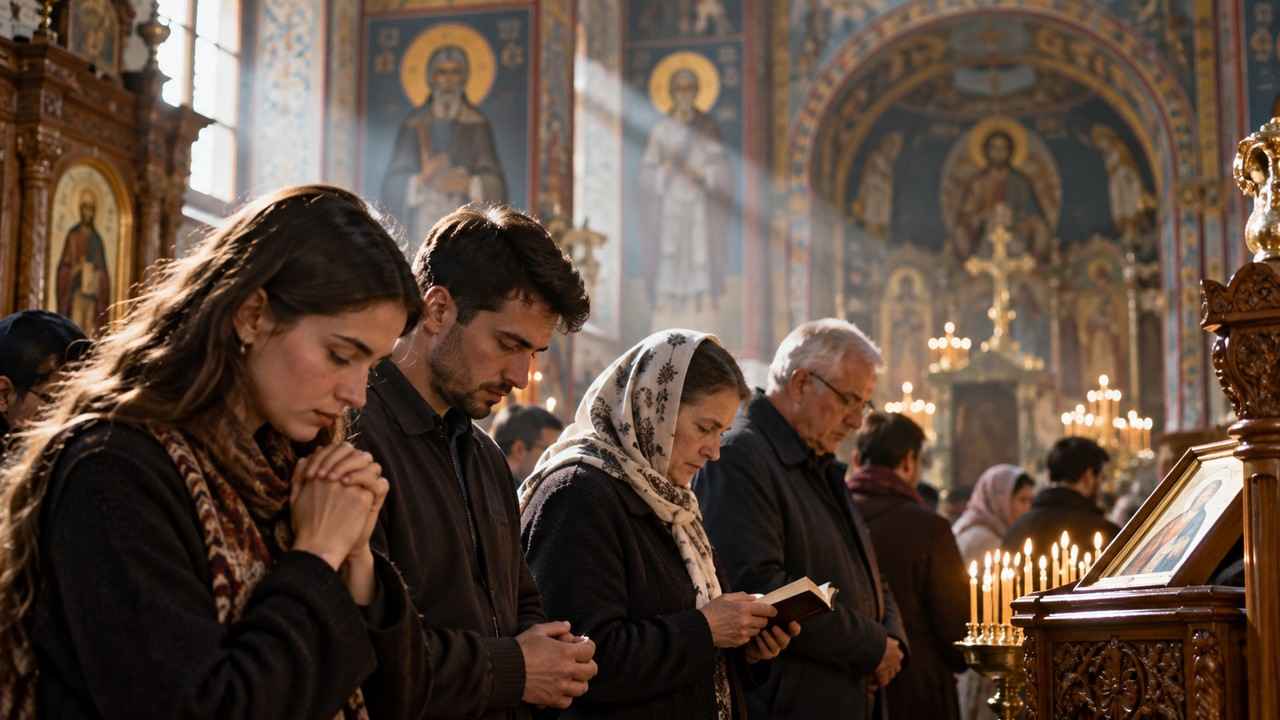
Romania carries one of Europe’s most visible Christian inheritances. Churches, monasteries and crosses are woven into its landscape, public life and national story. Most Romanians still identify with Christianity, especially the Romanian Orthodox Church, while Catholic, Reformed, Pentecostal, Baptist and other Christian communities are also important parts of the country’s religious life.
There is much for which Christians can thank God. Churches worship openly, substantial ministries care for people in need, evangelical congregations continue to preach and serve, and young people are gathering for Christian fellowship and teaching.
Yet being surrounded by Christianity is not the same as knowing Christ. Romania’s deepest spiritual need is not simply to preserve a Christian culture, but for people to repent, trust the gospel and follow Jesus faithfully. Pray for clear preaching, biblical discipleship and churches whose public profession of faith is matched by holiness, mercy and truth.
Romania also faces a prolonged government crisis, economic pressure, migration and the continuing effects of the war in neighbouring Ukraine. Pray that Christians would respond to these pressures with steady faith and compassionate service.
Prayer Burden at a Glance
- Pray that people surrounded by Christian tradition would personally repent, believe the gospel and follow Jesus Christ.
- Pray for faithful preaching, biblical discipleship and godly leadership across Romanian churches.
- Pray for children and young adults to grow in lasting faith rather than inherit Christianity only as culture or custom.
- Pray for wisdom, integrity and stable government.
- Pray for families facing economic pressure, migration and separation.
- Pray for churches and communities serving Ukrainians displaced by war.
- Pray for Romanian Christians to use their considerable religious freedom for courageous, compassionate and truthful witness.
Last verified: September 12, 2026
Why Romania Needs Prayer Now
Romania has broad Christian visibility and religious freedom, but each generation still needs the gospel, faithful discipleship and churches that use their freedom well.
Romania enjoys substantial religious freedom. Christians can gather, worship, teach, publish and serve openly. This freedom is a precious gift, and it gives churches wide opportunities to make Christ known.
One of Romania’s central spiritual challenges is that visible Christianity can exist without personal faith and discipleship. Familiarity with churches, ceremonies and Christian language can coexist with spiritual indifference. Each generation therefore needs to hear the gospel clearly and be called to repentance, faith and obedience.
This is especially important among younger Romanians growing up amid migration, digital culture, changing social expectations and wider European secularising influences. Churches need wisdom not merely to preserve traditions, but to disciple young people patiently and faithfully.
Romania also faces practical pressures. Weak economic growth and high prices are affecting households, while the prolonged government crisis has made national leadership less settled. Many families have also been reshaped by migration as Romanians have sought work and opportunities abroad.
Pray for churches that proclaim Christ clearly, strengthen families and serve their neighbours with integrity and compassion.
Country Snapshot
A brief orientation to Romania’s location, people, religious landscape and regional setting.

Romania lies in southeastern Europe, between Central Europe, the Balkans and the Black Sea region. It borders Ukraine, Moldova, Bulgaria, Serbia and Hungary. Bucharest is the capital and largest city.
Romania’s 2021 census recorded a resident population of about 19 million. Romanian Orthodox Christianity is by far the country’s largest declared religious affiliation. Roman Catholics, Reformed Christians, Pentecostals, Baptists, Greek Catholics, Brethren and other communities also have significant histories and ministries.
These figures describe religious affiliation, not the spiritual condition of individual people. Church membership, baptism and inherited identity cannot tell us whether someone has been reconciled to God through Christ.
Romania is a member of the European Union and NATO. Its Black Sea position and border with Ukraine also place it close to the continuing consequences of Russia’s war against Ukraine.
Spiritual and Practical Challenges Affecting Christians and Churches
Romania’s churches minister amid inherited Christian identity, generational change, public responsibility, economic strain and the effects of migration.
From Christian familiarity to Christian discipleship
For many Romanians, Christianity is part of family history and national culture. This gives churches many opportunities for witness, but outward belonging cannot replace repentance and faith.
Pray for pastors, priests, ministers, parents and Christian teachers to direct people toward Christ Himself. Ask God to make churches places where Scripture is taken seriously, the gospel is clearly taught and believers are helped to grow in prayer, holiness and obedience.
Reaching younger generations
Young Romanians are growing up in a rapidly changing society. Migration, online culture and changing attitudes toward religious institutions all shape the questions they ask about faith.
Recent Christian youth gatherings show that many young people remain willing to engage seriously with Christianity. Pray that this interest would lead beyond temporary enthusiasm or inherited belonging into knowledge of Scripture, faith in Christ and lasting involvement in faithful local churches.
Faithful leadership and credible witness
Because Christianity remains highly visible in Romania, the character of Christian leaders and institutions matters.
Pray for church leaders to resist pride, corruption, misuse of influence and the temptation to protect reputation at the expense of truth. Ask God to give pastors and ministers humility, sound doctrine, courage and genuine pastoral care.
Pray also that ordinary Christians would commend the gospel through integrity, faithfulness in family life, generosity, justice and love for neighbour.
Families under economic and migration pressure
Economic strain and migration affect many Romanian households. Some families face rising costs or insecure employment; others live across different countries because parents or relatives have sought work abroad.
Pray for churches serving poor families, older people, vulnerable children and communities facing long-term disadvantage. Pray also for Romanian congregations abroad to strengthen families, disciple believers and bear faithful witness where they live.
Christian Life and Witness in Romania
Romanian churches worship and serve openly, creating substantial opportunities for biblical teaching, discipleship, mercy and gospel witness.
Romanian churches remain active in worship, education, charity and community life.
The Romanian Orthodox Church, the country’s largest Christian body, maintains extensive social and charitable ministries serving older adults, children, families in need and people living with disabilities. Recent Orthodox youth gatherings also show deliberate efforts to involve younger generations in prayer, teaching and Christian fellowship.
Romania also has substantial Pentecostal, Baptist, Brethren, Reformed, Catholic and other Christian communities. Evangelical churches have longstanding ministries of Bible teaching, evangelism, congregational life and mission, including among Romanian-speaking communities abroad.
Christians can give thanks wherever Scripture is faithfully taught, Christ is confessed, neighbours are loved and people in need are served. At the same time, no denominational label, ceremony or membership figure should be treated as proof of spiritual life.
Pray for churches of every tradition to be tested by Scripture. Ask God to correct error, deepen faithfulness and produce clear Christian fruit in believers’ lives.
Romania’s religious freedom gives churches wide opportunities to worship, teach, evangelise and serve openly. Pray that these opportunities would be used faithfully rather than taken for granted.
Recent Developments
Several current developments sharpen prayer for Romania without defining the whole country.
-
September 10, 2026
Prolonged government crisis
Romania entered September 2026 after several months without a government exercising full powers. Earlier attempts to establish a new government had failed to secure the necessary parliamentary support. As of September 10, 2026, interim prime minister Ilie Bolojan was still serving during the extended caretaker period and publicly urging that a new prime minister be nominated as soon as possible.
The eventual nominee and governing arrangement were still unsettled at that point. This guide therefore does not assume who will become prime minister or which parties will form the next government.
Pray: Ask God to give political leaders wisdom, integrity, responsible compromise and a desire to seek the country’s welfare rather than personal or party advantage.
-
2026 economic outlook
Economic strain
European Commission forecasts published in 2026 pointed to very weak growth, continued high inflation and substantial fiscal pressures.
For ordinary households, these pressures can mean higher living costs, strained budgets and anxiety about employment and the future.
Pray: Pray for wise economic stewardship, honest administration, responsible use of public resources and care for people already living with financial hardship.
-
May 31, 2026 refugee context
Continuing responsibility toward Ukrainians
Russia’s war against Ukraine continues immediately beyond Romania’s northeastern border. Romania has received and supported many Ukrainians displaced by the war. Authorities, charities, churches, volunteers and ordinary citizens have helped provide assistance and longer-term support.
Pray: Ask God to comfort displaced families, sustain those serving them, preserve compassion and give Romania wisdom as it lives beside a continuing regional war.
-
August 31–September 3, 2026
Christian young people gathering
The International Meeting of Orthodox Youth held in Bucharest brought together roughly 2,400 young people for prayer, teaching, discussion and fellowship.
Give thanks and pray: Thank God that young people can gather openly around Christian faith, and pray that such events would lead beyond temporary enthusiasm into deeper knowledge of Scripture, repentance, holiness, love for Christ and faithful participation in local churches.
How to Pray
Pray for living faith in Christ, faithful churches, younger generations, wise leadership, strong families and compassionate Christian witness.
-
Pray for genuine faith in Christ. Ask God to awaken people who know Christianity mainly as family tradition, public identity or religious practice. Pray for clear proclamation of the gospel and for many to understand the seriousness of sin, the sufficiency of Christ’s death and resurrection, and the call to repent and believe.
-
Pray for faithful churches and church leaders. Pray for pastors, priests, elders, ministers, theologians and Christian workers to submit themselves to God’s Word. Ask God to give them courage to teach truth, humility in leadership, integrity in the use of influence and patient care for the people they serve.
-
Pray for children and young adults. Ask God to raise up a generation whose faith is more than inherited custom. Pray for Christian parents, teachers, youth leaders and local churches to disciple young people wisely. Ask that young Romanians would read Scripture, understand the gospel and remain rooted in faithful Christian community.
-
Pray for wisdom and integrity in government. Pray for Romania during its prolonged government crisis. Ask God to give the president, parliament, political parties and national institutions wisdom and restraint. Pray against corruption, selfish ambition and political paralysis, and ask that those entrusted with authority would seek justice and the welfare of the people.
-
Pray for families facing economic and migration pressures. Remember households struggling with rising costs, uncertain work or separation across national borders. Pray for dignified employment, wise economic stewardship and strong marriages and families. Ask God to strengthen Romanian churches both at home and throughout the diaspora as they care for people living through these pressures.
-
Pray for Ukrainians living in Romania. Pray for refugees and displaced families rebuilding their lives away from home. Ask God to comfort those carrying grief, separation and uncertainty. Pray for Romanian Christians serving them and for compassion to endure after years of war.
-
Pray for truth, peace and faithful Christian witness. Romania’s Christian landscape includes Orthodox, Catholic, Reformed, Pentecostal, Baptist, Brethren and other communities with real theological differences. Pray for peaceful relationships without pretending those differences do not matter. Where Christians can work together without compromising biblical conviction, ask God to make their service humble and fruitful. Pray especially that Christians would be known for truthfulness, holiness, mercy and love.
-
Pray for lasting spiritual fruit. Ask God to bring enduring spiritual fruit through Romania’s Christian inheritance. Pray for converted lives, faithful marriages, biblically grounded churches, courageous witness, compassionate service and believers whose confidence rests in Jesus Christ.
Give Thanks
Romania’s needs are real, but Christians can also thank God for concrete freedoms, ministries of mercy and signs of faithful witness.
-
Give thanks for religious freedom. Romanian Christians can worship, teach, evangelise and serve openly.
-
Give thanks for faithful churches. Thank God for congregations where Scripture is faithfully taught and Christ is confessed.
-
Give thanks for ministries of mercy. Thank God for Christians caring for children, older people, vulnerable families and others in need.
-
Give thanks for hospitality toward displaced people. Thank God for Christians and volunteers who have welcomed people displaced from Ukraine.
-
Give thanks for ministry among younger generations. Thank God for young people gathering for Christian teaching, prayer and fellowship.
-
Give thanks for Romanian believers at home and abroad. Thank God for churches and believers serving communities in Romania and throughout the diaspora.
-
Give thanks for visible Christian fruit. Thank God for every evidence of repentance, faithful preaching, mercy, generosity and perseverance.
Pray that these gifts would deepen gratitude, faithfulness and a desire to make Christ known.
Last Verified / Update Note
This note helps readers understand when the guide was reviewed and which developments may affect how they use it for prayer.
Review Status
Reviewed for current prayer use
Romania’s religious landscape, Christian life and witness, religious freedom, government situation, economic pressures, migration and refugee context, and significant developments affecting prayer in September 2026.
Genuine faith in Christ amid widespread inherited Christian identity; faithful churches and leaders; discipleship of children and young adults; integrity and stability in government; families under economic and migration pressure; and continued compassion toward Ukrainians displaced by war.
Romania remained under an interim government in the latest verified reporting used for this guide. Because negotiations over a new prime minister and governing majority were still continuing, that part of the guide may require a limited update if a new government is formed.
This guide draws first on Romanian official, national and church sources where they directly address Romanian law, politics, demographics and church life, together with European Commission and UNHCR material for economic and refugee conditions. Religious census figures describe reported affiliation and should not be read as evidence of personal Christian faith.
Help keep this guide accurate and current
If you noticed a possible correction, broken link, or significant country update, please contact the Nations Prayer Directory so we can review it carefully.
Key Sources Consulted
These sources provide the main demographic, legal, political, economic, humanitarian and church-life context used in this guide.
Official demographic and legal sources
- Romania — 2021 Population and Housing Census, definitive results. Used for resident-population and religious-affiliation context.
- Romanian Constitution — Article 29, Freedom of Conscience. Used for the constitutional framework protecting religious belief, worship and religious autonomy.
Government and political developments
- AGERPRES — Romania’s government-formation chronology through September 5, 2026. Used for the sequence of failed government-formation attempts and the extended caretaker period.
- AGERPRES — Ilie Bolojan on the prolonged caretaker period, September 10, 2026. Used for the latest dated government-status wording in the guide.
- Radio România Actualități — government-majority negotiations, September 10, 2026. Used for national public-service reporting on the continuing search for a parliamentary majority and delayed prime-ministerial nomination.
Economic and humanitarian context
- European Commission — Economic Forecast for Romania. Used for the 2026 growth, inflation and fiscal outlook.
- UNHCR — Ukraine Refugee Situation: Romania. Used for the scale and continuing context of Romania’s support for people displaced from Ukraine.
Church-life source
- Romanian Patriarchate — ITO 2026 youth gathering. Used as first-party reporting on the September youth gathering and its stated ministry purpose.
Source Context
These notes explain how to read the evidence behind the guide, especially where figures describe affiliation, forecasts or fast-changing developments.
Source Context
- Religious affiliation. Romania’s census gives a strong picture of declared religious identity, but census affiliation does not show whether individuals personally trust Christ or actively practise their faith. The guide therefore keeps sociological Christian identity distinct from saving faith and discipleship.
- Church-life reporting. Information about Orthodox youth ministry and church activity comes in part from Romanian Orthodox Church sources. These are appropriate for describing the church’s own activities and stated aims, but they are treated as first-party reporting rather than independent assessments of spiritual health.
- Political developments. Romania’s government-formation process was still moving when this guide was reviewed. Political statements are therefore dated carefully, and the guide does not predict who will become prime minister or which coalition will govern.
- Economic figures. The 2026 growth, inflation and fiscal figures are European Commission forecasts rather than final year-end outcomes.
- Refugee figures. UNHCR’s recorded total for refugees from Ukraine is dated May 31, 2026. The exact number may change, so the guide uses the figure to establish the scale of Romania’s continuing refugee responsibility rather than implying a permanent total.
- Perspective balance. Romanian official, national and church sources were used alongside European and international institutional sources so that Romania’s religious and political situation is not described only through an outside reporting lens.
A Closing Prayer for Romania
A prayer gathering Romania’s present spiritual and practical burdens before the Lord.


