


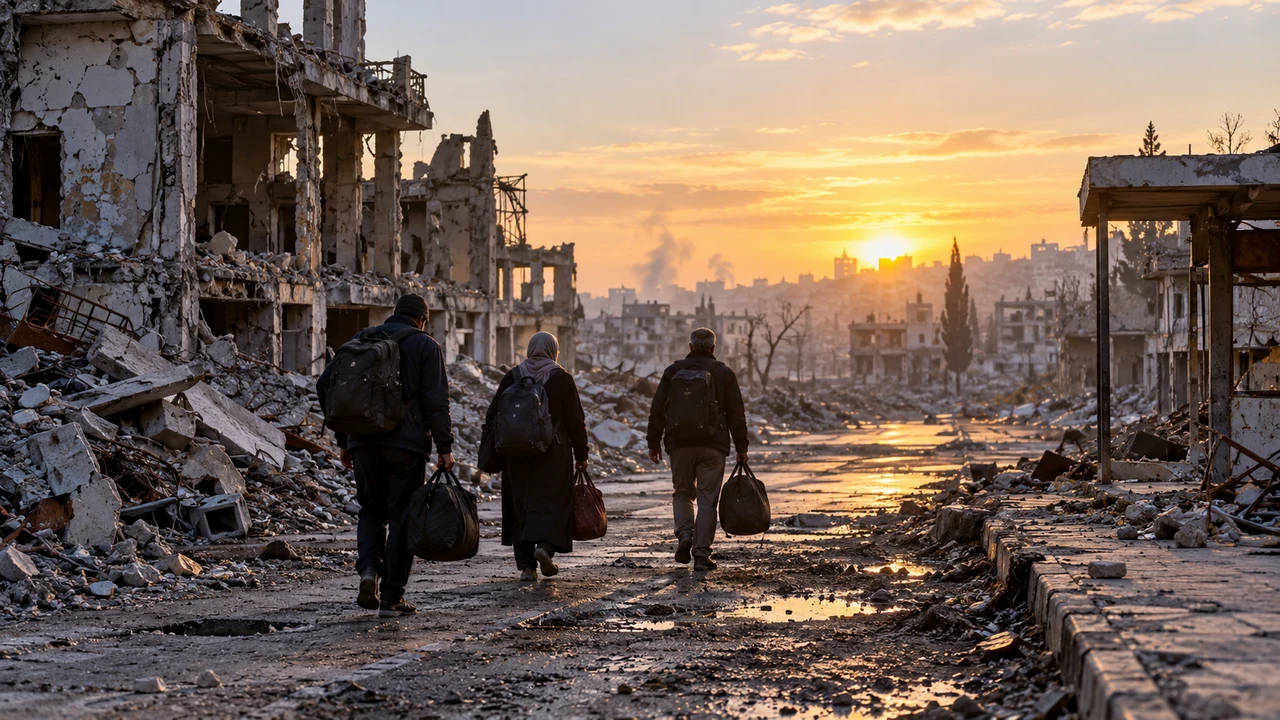
Ranking Method Note
This ranking compares countries experiencing active war, civil war, major insurgency, occupation-related violence, or other organized armed conflict at a serious scale.
Five factors are considered together:
- Conflict Intensity — 25%
- Humanitarian Severity — 25%
- National-Societal Disruption — 20%
- Current Urgency / Escalation — 20%
- Prayer-and-Ministry Relevance — 10%
No single casualty figure, battlefield development, or humanitarian statistic determines the order. The ranking considers how severe the fighting is now, how deeply civilians and ordinary national life are being affected, whether conditions are worsening, and how the situation should shape informed Christian prayer.
Several different kinds of war shape this October list.
Sudan and Ukraine remain exceptionally severe, long-running wars. Yemen has returned to major escalation while millions already face acute hunger. Gaza is experiencing less fighting than during the earlier full-scale phase of the war, but destruction, displacement, continuing strikes, and severe humanitarian need remain widespread.
Myanmar and eastern Democratic Republic of the Congo continue to endure entrenched multi-front conflicts. Lebanon is living with the consequences of a major 2026 escalation and continuing attacks. Iran remains affected by a prolonged interstate conflict even though direct strike activity was much lower in late September. Burkina Faso and Mali continue to face deeply rooted insurgencies across the central Sahel.
How to Read This Ranking
This list is not a measure of a nation’s worth, a political endorsement, or a contest over whose suffering matters most.
Its purpose is to help Christians pray with greater understanding for places where active armed conflict is causing especially serious loss of life, displacement, fear, hunger, damaged livelihoods, and disruption of ordinary life.
Rank movement should also be read carefully. A country moving down does not necessarily mean conditions improved. Another conflict may simply have worsened more sharply. An unchanged rank does not mean conditions stayed the same.
What Changed Since the Previous Ranking
The most recent published War and Armed Conflict ranking was July 2026.
- Sudan remains No. 1.
- Ukraine rises from No. 3 to No. 2.
- Yemen enters at No. 3.
- State of Palestine / Gaza falls from No. 2 to No. 4.
- Myanmar remains No. 5.
- Democratic Republic of the Congo falls from No. 4 to No. 6.
- Lebanon falls from No. 6 to No. 7.
- Iran falls from No. 7 to No. 8.
- Burkina Faso remains No. 9.
- Mali remains No. 10.
- South Sudan moves from No. 8 to the watchlist.
Working Definition
A country qualifies when active war or major armed conflict is seriously affecting civilian safety and national life. This may include interstate war, civil war, multi-front conflict, major insurgency or counterinsurgency, or occupation-related warfare.
Political unrest, isolated attacks, or ordinary criminal violence alone are not enough.
Ranking Criteria
Five factors are considered together:
-
Conflict Intensity 25% How active, widespread, and militarily serious is the fighting?
-
Humanitarian Severity 25% How severe are conflict-related displacement, civilian casualties, hunger, infrastructure damage, and disruption of essential services?
-
National-Societal Disruption 20% How deeply is the conflict affecting daily life, public institutions, livelihoods, infrastructure, and national stability?
-
Current Urgency / Escalation 20% Has the conflict recently intensified or entered a particularly dangerous phase?
-
Prayer-and-Ministry Relevance 10% How directly is the conflict affecting families, churches, Christian witness, public fear, and the practical burdens carried by believers and ministries?
Top Ten Countries
Sudan
A prolonged national war continues to combine mass displacement, civilian danger, hunger, and severe disruption of ordinary life.
Fighting between the Sudanese Armed Forces and Rapid Support Forces remains active across several parts of Sudan, including Darfur and the Kordofans.
Sudan remains No. 1 because large-scale fighting, forced displacement, hunger, and the breakdown of essential services continue together. The UN Refugee Agency reported in late September that about 11.3 million people were forcibly displaced, including roughly 6.4 million within Sudan.
Unchanged at No. 1. The unchanged position reflects continuing extreme severity, not stability.
Fighting across several regions, attacks affecting civilians, repeated displacement, food insecurity, damaged public services, and serious limits on humanitarian access.
More than three years of war have damaged health care, education, livelihoods, food access, and the ability of millions of families to live safely.
Pray for civilians to be protected from killing, abuse, and forced displacement; for food and medical care to reach families in need; for commanders and political leaders to turn from further violence; for justice where atrocities have been committed; and for churches to serve faithfully amid fear and loss.
Key current sources used: UN Refugee Agency reporting on Sudan’s displacement emergency and continuing conflict.
Ukraine
High-intensity interstate war continues across a broad front while missiles and drones place civilians far beyond the front line at risk.
Russia’s invasion remains one of the world’s largest active interstate wars, combining sustained frontline combat with extensive missile and drone attacks.
Civilian casualties have risen sharply in 2026. United Nations human rights monitoring recorded 2,222 civilians killed and 13,058 injured from January through August—already more casualties than were recorded during all of 2025.
Rises from No. 3 to No. 2. The rise reflects sustained military intensity and the worsening civilian-casualty pattern during 2026.
Frontline combat, long-range strikes, civilian deaths and injuries, displacement, damage to infrastructure, and continued danger to cities far from the front.
Communities close to the fighting face repeated attacks and evacuation, while missiles and drones continue to affect homes, businesses, transport systems, and other civilian facilities across the country.
Pray for civilians, the wounded, and displaced families; for restraint by Russian and Ukrainian forces; for prisoners and separated families; for churches and chaplains caring for people living with trauma; for protection of critical infrastructure; and for a just path toward peace.
Key current sources used: United Nations Human Rights Monitoring Mission in Ukraine reporting on civilian protection.
Yemen
Renewed fighting is striking a population already weakened by years of war, hunger, displacement, and damaged public services.
Yemen has returned to substantial conflict escalation, with renewed fighting forcing families from their homes and increasing regional security risks.
The combination of fresh fighting and severe pre-existing humanitarian need places Yemen among the most serious conflicts this month. On October 2, the World Food Programme reported that renewed fighting had displaced more than 149,000 people and that 18.3 million people across Yemen faced acute food insecurity.
Enters at No. 3. Yemen was on July’s watchlist when large-scale fighting remained comparatively reduced. The recent escalation changes that assessment.
Renewed combat, displacement, disrupted markets and aid access, widespread hunger, and growing danger around important regional transport routes.
Families are being displaced again in a country where millions already struggle to obtain enough food and where years of conflict have weakened livelihoods and public services.
Pray for the fighting to ease quickly; for families forced from their homes to find safety, food, and medical care; for restraint among Yemeni and regional combatants; for children facing hunger and displacement; and for Christians to endure faithfully amid deep insecurity.
Key current sources used: World Food Programme reporting from October 2 and Armed Conflict Location & Event Data conflict monitoring of Yemen.
State of Palestine / Gaza
Fighting is lower than during the earlier full-scale phase of the war, but Gaza remains devastated and civilians continue to face strikes, displacement, and severe shortages.
Gaza remains profoundly affected by the consequences of war, while strikes and other military activity have continued despite the ceasefire.
Reduced fighting matters in a ranking of active armed conflict, but the scale of humanitarian suffering and destruction remains extraordinary. The United Nations Office for the Coordination of Humanitarian Affairs reported in late September that 94% of Gaza’s population required urgent shelter and basic household assistance.
Current conflict monitoring also shows that violence has fallen substantially compared with the earlier war period, while airstrikes continued and increased again during September.
Falls from No. 2 to No. 4. This reflects lower active-war intensity and sharper escalation elsewhere. It does not mean Gaza’s humanitarian crisis has ended.
Continuing strikes, unsafe or destroyed housing, displacement, shortages of medical supplies, damaged water and sanitation systems, and restrictions affecting humanitarian operations.
Many families remain in tents, makeshift shelters, or damaged buildings, while essential health, water, sanitation, and housing systems remain severely impaired.
Pray for Palestinian and Israeli civilians to be protected from further violence; for food, shelter, medicine, and safe humanitarian access; for armed actors to exercise restraint; for families carrying grief and trauma; and for a durable peace marked by justice and respect for human life.
Key current sources used: United Nations Office for the Coordination of Humanitarian Affairs reporting on the occupied Palestinian territory and Armed Conflict Location & Event Data conflict monitoring.
Myanmar
A fragmented nationwide civil war continues to uproot millions and expose civilians to armed clashes, airstrikes, landmines, and repeated displacement.
Myanmar remains a large multi-front conflict involving the military, resistance forces, and numerous ethnic armed organizations.
The war affects communities across many parts of the country and continues to create severe humanitarian needs. The United Nations Children’s Fund reported that 16.2 million people required humanitarian assistance and that nearly 3.8 million people were internally displaced by mid-2026.
Unchanged at No. 5. Yemen’s rise changes the countries above Myanmar, but Myanmar itself remains one of the world’s most entrenched major conflicts.
Armed clashes, airstrikes, landmines, displacement, fragmented control of territory, and serious restrictions on humanitarian access.
Families are being displaced across several regions while conflict, economic decline, and weakened public services make it harder for civilians to find safety, health care, education, and reliable livelihoods.
Pray for civilians exposed to airstrikes and armed clashes; for displaced families and ethnic minorities; for protection from forced recruitment and landmines; for humanitarian workers to reach communities in need; and for churches to serve courageously and compassionately.
Key current sources used: United Nations Children’s Fund humanitarian reporting, United Nations humanitarian updates, and current conflict monitoring.
Democratic Republic of the Congo
Eastern Congo remains caught in overlapping armed conflicts that repeatedly uproot families and expose civilians to violence.
Fighting involving the 23 March Movement and numerous other armed groups remains active across eastern Democratic Republic of the Congo, alongside continuing violence in Ituri and other areas.
The conflict is deeply entrenched and repeatedly creates new protection emergencies. Following renewed fighting in Ituri on September 27, about 3,100 civilians—including many women and children—sought protection near a United Nations Organization Stabilization Mission in the Democratic Republic of the Congo base.
Falls from No. 4 to No. 6. This is mainly a result of Yemen’s renewed escalation and changes elsewhere in the comparison, not a sign that eastern Congo has become safe.
Fighting involving the 23 March Movement, violence by other armed groups, repeated displacement, attacks on civilians, sexual violence, and barriers to humanitarian access.
Large numbers of people remain displaced or have returned to areas where security and basic services are uncertain, while conflict continues to interact with hunger and disease.
Pray for civilians threatened by armed groups; for displaced families to find safety; for women and children vulnerable to abuse; for aid workers to reach people in danger; for regional leaders to pursue peace rather than further conflict; and for churches caring for frightened and traumatized communities.
Key current sources used: United Nations Organization Stabilization Mission in the Democratic Republic of the Congo reporting and other United Nations humanitarian reporting on eastern Congo.
Lebanon
A fragile ceasefire has reduced some fighting, but hundreds of thousands remain displaced and continuing attacks keep the security situation unstable.
Lebanon remains directly affected by Israel–Hezbollah hostilities and continuing military activity, especially in the south.
The effects of the 2026 escalation remain severe. The International Organization for Migration (IOM) recorded 333,144 internally displaced people as of September 9 after displacement had earlier exceeded 1.2 million. Lebanese health authorities reported through IOM that 4,335 people had been killed since March 2, including deaths after the June ceasefire.
Conflict monitoring also recorded increased air and drone attacks during September compared with the earlier ceasefire period.
Falls from No. 6 to No. 7. This one-place fall is comparative. Lebanon remains seriously affected by active conflict.
Continuing strikes, fragile returns, renewed displacement, damaged homes and infrastructure, and the risk that larger-scale fighting could resume.
The conflict has damaged homes, health facilities, livelihoods, and already strained public services, especially in southern Lebanon.
Pray for civilians in Lebanon and Israel; for restraint by Israel and Hezbollah; for displaced and returning families to find safety; for homes, livelihoods, and public services to be restored; for lawful institutions to grow stronger; and for churches to serve people across political and sectarian divisions.
Key current sources used: International Organization for Migration crisis-response reporting, United Nations Lebanon response material, and Armed Conflict Location & Event Data conflict monitoring.
Iran
Months of interstate conflict have caused serious civilian, infrastructure, and economic disruption, although direct strike activity was much lower in late September.
Iran remains involved in an unresolved armed conflict with the United States and Israel, with major cumulative military activity and continuing regional risks.
The overall 2026 conflict has been extensive, but the latest fighting is less intense than cumulative figures alone suggest. Armed Conflict Location & Event Data recorded two United States–Israeli strike events and four Iranian strike events during September 22–28, compared with thousands of strike events recorded since February 28.
Falls from No. 7 to No. 8. Iran remains seriously affected, but lower current strike activity places it below several wars where civilians are facing more intense immediate fighting.
An unresolved interstate conflict, damaged infrastructure, economic strain, disruption affecting civilian life, sporadic strikes, and continuing danger around regional transport and energy routes.
Even during periods of lower direct strike activity, the damage and wider economic effects of months of conflict continue to affect civilian life.
Pray for civilians to be protected; for leaders and armed forces on every side to exercise restraint; for families to have reliable access to medicine and essential services; for churches and vulnerable Christians to be protected; and for serious diplomacy to reduce the danger of renewed large-scale fighting.
Key current sources used: Armed Conflict Location & Event Data monitoring of the Iran war and United Nations humanitarian reporting.
Burkina Faso
A deeply rooted Sahel insurgency continues to expose communities to militant violence and weaken state control across large areas.
Burkina Faso remains one of the main theatres of the central Sahel insurgency, involving the Group for Support of Islam and Muslims, Islamic State Sahel Province, and national security forces.
The insurgency is deeply established, and armed groups remain capable of sustained operations, territorial expansion, and major attacks. Current Armed Conflict Location & Event Data analysis continues to describe Burkina Faso as one of the core states affected by the regional jihadist conflict, with major fighting between armed groups also recorded during September.
Unchanged at No. 9. The conflict remains severe enough to keep Burkina Faso inside the Top Ten despite major changes elsewhere.
Insurgent attacks, fighting among armed groups and security forces, danger to civilians, displacement, and weak state reach in conflict-affected areas.
Insecurity limits safe movement and access to livelihoods, education, and essential services. Across Burkina Faso, Mali, and Niger, the UN Refugee Agency reported 3.8 million forcibly displaced people by the end of July, with insecurity remaining the main driver.
Pray for civilians living under militant threat; for displaced families; for pastors and churches serving insecure communities; for security forces to protect civilians lawfully and responsibly; for isolated communities to receive food and basic services; and for armed groups that prey on civilians to lose their power.
Key current sources used: Armed Conflict Location & Event Data reporting on Burkina Faso and the central Sahel, and UN Refugee Agency reporting on displacement.
Mali
An entrenched insurgency continues to challenge state control, threaten civilians, and place important towns and transport routes under pressure.
Mali remains at the centre of the Sahel conflict, involving the Group for Support of Islam and Muslims, Islamic State Sahel Province, state forces, and other armed groups.
Mali remains narrowly inside the Top Ten because armed groups demonstrated substantial military reach during 2026. In the spring, a coordinated offensive by the Group for Support of Islam and Muslims and the Azawad Liberation Front struck several important locations and changed control over parts of the north. July fighting also showed continuing pressure on Malian forces and important transit routes.
These developments are part of a wider Central Sahel crisis in which insecurity remains the leading cause of displacement.
Unchanged at No. 10. Mali remains close to the boundary, but current evidence supports retaining it.
Insurgent attacks, fighting for territory and transport routes, danger to civilians, pressure on state forces, and continuing insecurity across northern and central regions.
Insecurity disrupts travel, commerce, livelihoods, and access to essential services while contributing to continuing displacement.
Pray for civilians threatened by insurgents and abusive armed actors; for safe roads and access to food and medical care; for churches and vulnerable communities to be protected; for security forces to act justly and lawfully; and for lasting peace across Mali and the wider Sahel.
Key current sources used: Armed Conflict Location & Event Data’s 2026 Mali conflict analysis and UN Refugee Agency reporting on forced displacement in the Central Sahel.
Near-Miss / Watchlist Countries
Ethiopia — Renewed fighting in northern Ethiopia is deeply concerning. The United Nations reported on September 30 that new displacement was emerging alongside threats to civilians, humanitarian personnel, and civilian infrastructure. Ethiopia remains the first country outside the Top Ten and should be watched closely for further escalation.
South Sudan — Armed clashes and communal violence continue to kill and injure civilians. The United Nations Mission in South Sudan documented 767 civilians killed in conflict-related violence during the first quarter of 2026. South Sudan remains a serious prayer concern but does not currently exceed the combined conflict severity of the final ten.
Somalia — Al-Shabaab remains a major armed threat, while other local and regional clashes continue to add instability and displacement. Somalia remains close enough to require continued monitoring.
Pakistan — Militancy in Khyber Pakhtunkhwa and Balochistan, together with renewed Pakistan–Afghanistan military tensions, keeps Pakistan within the wider field of serious armed conflicts.
Syria — Armed insecurity, militant threats, communal tensions, and foreign military activity remain significant, but the present comparative intensity stays below the final October Top Ten.
Final Summary Judgment
October’s ranking is shaped by both long-running wars and sharp new escalation.
Sudan and Ukraine remain at the top because intense warfare and serious civilian harm continue on a very large scale. Yemen’s renewed fighting moves it directly into the upper part of the list because fresh displacement is occurring alongside severe hunger and years of accumulated damage.
Gaza remains among the gravest conflict-affected places even though ceasefire-era violence is below the intensity of earlier phases of the war. Myanmar and eastern Democratic Republic of the Congo continue to receive less international attention than some other conflicts, but large civilian populations remain displaced or exposed to armed violence.
Lebanon’s 2026 conflict has caused enough death, displacement, destruction, and continuing insecurity to keep it well inside the Top Ten. Iran also remains in the list because months of interstate warfare have had serious consequences, though the late-September strike tempo was considerably lower than earlier in the conflict.
At the lower end, Burkina Faso and Mali remain narrowly ahead of Ethiopia because their insurgencies are already deeply entrenched and sustained. Ethiopia should be watched closely because renewed northern fighting could change that comparison quickly.
How to Pray Through This List
-
Pray for civilians who cannot escape the fighting. Ask God to protect children, families, older people, medical workers, and displaced communities.
-
Pray for armed actors to exercise restraint. Ask that governments, commanders, militias, and insurgent groups be restrained from attacks on civilians, revenge killings, indiscriminate force, and wider escalation.
-
Pray for just peacemaking. Ask for negotiations and political settlements that protect civilians, confront wrongdoing truthfully, and reduce the likelihood of another cycle of war.
-
Pray for churches serving in dangerous places. Ask God to strengthen pastors, congregations, chaplains, and Christian ministries to serve their neighbours faithfully without becoming captive to hatred, ethnic hostility, or political nationalism.
-
Pray for displaced families and humanitarian workers. Ask for food, shelter, medicine, safe roads, functioning hospitals, and reliable access for people trying to reach those in danger.
-
Pray for repentance, justice, and reconciliation. Ask God to restrain vengeance, expose wrongdoing and lies, bring perpetrators to justice, and prepare communities for the difficult work of rebuilding peace.
Key Sources Consulted
Principal sources for this October review include:
- UN Refugee Agency reporting on Sudan’s displacement emergency.
- United Nations Human Rights Monitoring Mission in Ukraine reporting on civilian deaths, injuries, and protection concerns.
- World Food Programme reporting on Yemen’s renewed displacement and food insecurity.
- United Nations Office for the Coordination of Humanitarian Affairs reporting on humanitarian conditions in the occupied Palestinian territory.
- Armed Conflict Location & Event Data (ACLED) monitoring of conflict trends in Gaza and Lebanon.
- United Nations Children’s Fund humanitarian reporting on Myanmar.
- United Nations Organization Stabilization Mission in the Democratic Republic of the Congo and other United Nations reporting on civilian protection and displacement in eastern Congo.
- International Organization for Migration reporting on displacement and crisis conditions in Lebanon.
- ACLED and United Nations reporting on the Iran conflict and changing strike intensity.
- ACLED conflict analysis for Burkina Faso and Mali.
- UN Refugee Agency reporting on displacement across the Central Sahel.
- United Nations and specialist conflict monitoring used to assess Ethiopia, South Sudan, Somalia, Pakistan, and Syria.
Closing Prayer Invitation
Continue praying
Continue praying for the nations
Use this list as one doorway into a wider rhythm of prayer for the nations.


